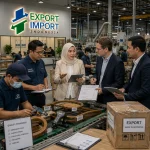

Navigating the Indonesian import landscape can be a complex endeavor. As the largest economy in Southeast Asia, Indonesia presents immense opportunities for international trade. However, the Indonesian government strictly regulates the influx of foreign goods to protect domestic industries, ensure national security, and maintain consumer health and safety standards.
For businesses and entrepreneurs looking to bring commodities into the archipelago, understanding the legal frameworks, tax obligations, and step-by-step procedures is absolutely critical. A single missing document or incorrect product classification can lead to severe delays at the port, hefty demurrage fees, or even the confiscation of goods.
Do Import Procedures Differ by Country of Origin?
One of the most common questions asked by new importers is whether the rules change depending on where the goods are coming from. The short answer is: The fundamental legal and administrative procedures remain the same, but the financial obligations (tariffs) and specific documentary requirements vary significantly based on the country of origin.
The Indonesian government applies a universal standard for basic import legality (every importer needs the same foundational licenses). However, the origin of your goods dictates how much you will pay in import duties and whether you face specific trade barriers. This variation is driven primarily by Free Trade Agreements (FTAs) and anti-dumping regulations.
Free Trade Agreements and Preferential Tariffs
Indonesia is a member of the Association of Southeast Asian Nations (ASEAN) and has signed numerous bilateral and multilateral trade agreements. If you import a commodity from a country that has an FTA with Indonesia, you may be eligible for a preferential tariff rate, which can reduce the standard Import Duty (Bea Masuk) to as low as 0%.
Key agreements include:
- AFTA (ASEAN Free Trade Area): Eliminates tariffs for most goods traded among the 10 ASEAN member states.
- ACFTA (ASEAN-China Free Trade Area): Provides significant duty exemptions for goods originating from mainland China.
- IA-CEPA (Indonesia-Australia Comprehensive Economic Partnership Agreement): Lowers tariffs on agricultural products, livestock, and raw materials from Australia.
- IJEPA (Indonesia-Japan Economic Partnership Agreement): Facilitates smoother trade and lower tariffs for Japanese manufacturing components and electronics.
The Critical Role of the Certificate of Origin (SKA)
To benefit from these country-specific tariff reductions, the importer must present a valid Certificate of Origin (Surat Keterangan Asal or SKA) issued by the competent authority in the exporting country. Different FTAs require different forms. For example:
- Form D is used for ASEAN countries.
- Form E is used for goods originating from China.
- Form JIEPA is used for goods from Japan.
If you import machinery from Germany (which does not have a comprehensive bilateral FTA with Indonesia that zeros out tariffs in the same way AFTA does), you will pay the standard Most Favored Nation (MFN) tariff rate. If you import that exact same machinery from China and provide a valid Form E, your import duty could be completely waived.
Furthermore, Indonesia occasionally imposes Safeguard Duties (BMTP) or Anti-Dumping Duties (BMAD) on specific commodities from specific countries if the government determines that foreign goods are flooding the market at unfairly low prices (common with certain steel products, textiles, and ceramics from specific Asian nations). Therefore, checking the origin country is a mandatory step in financial forecasting.
Essential Prerequisites: Setting Up Your Import Entity
Before you can bring a single container into an Indonesian port, your business must be legally recognized and registered with the government as an importing entity.
- Establish a Legal Entity: You must have a registered Indonesian company, typically a Limited Liability Company (PT) or a Foreign-owned Limited Liability Company (PT PMA).
- Obtain a Business Identification Number (NIB): Processed through the Online Single Submission (OSS) system, the NIB (Nomor Induk Berusaha) acts as your company’s primary identity. Importantly, the NIB now simultaneously serves as your Importer Identification Number (API – Angka Pengenal Impor) and your Customs Registration Number (NIK – Nomor Identitas Kepabeanan). You no longer need to apply for these three things separately.
- Tax Identification Number (NPWP): Your company must have a valid corporate tax ID to process import duties and claim input taxes.
Understanding HS Codes and LARTAS
The foundation of global trade is the Harmonized System (HS) Code, an internationally standardized system of names and numbers to classify traded products. In Indonesia, this is localized into the Indonesian Customs Tariff Book (BTKI), which uses 8-digit codes.
Identifying the correct 8-digit HS code for your commodity is the most critical step of the entire process. The HS code dictates:
- The standard Import Duty rate.
- Whether the goods are subject to Value Added Tax (VAT) and Income Tax (PPh 22).
- Most importantly, whether the goods fall under LARTAS (Larangan dan Pembatasan), which translates to Prohibited and Restricted Goods.
If your commodity is flagged under LARTAS, it means you cannot simply import it with a standard NIB. You will need additional permits from specific government ministries. For instance:
- Food, Beverages, Cosmetics, and Pharmaceuticals require distribution licenses from BPOM (the National Agency of Drug and Food Control).
- Electronics and Tires often require an SNI (Indonesian National Standard) certificate.
- Agricultural products (fresh fruit, meats) require phytosanitary certificates and import quotas from the Ministry of Agriculture and the Ministry of Trade.
Importers check their HS codes against the Indonesia National Single Window (INSW) portal to reveal all LARTAS requirements and tariff rates instantly.
Import Duties and Taxes (PDRI)
When goods arrive in Indonesia, the importer must pay Taxes in the Framework of Import (Pajak Dalam Rangka Impor or PDRI). This usually consists of three to four components:
- Import Duty (Bea Masuk): Ranges from 0% to over 150%, depending on the HS code and applicable FTAs.
- Value Added Tax (VAT / PPN): Currently set at 11% of the total import value (CIF value + Import Duty), though this is slated to increase to 12% in the coming years based on national tax laws.
- Income Tax (PPh Article 22): Typically 2.5% for companies with a valid API/NIB, or 7.5% for those without. Certain consumer goods and luxury items attract a higher rate of 7.5% or 10% regardless of API status.
- Luxury-Goods Sales Tax (PPnBM): Applied only to specific high-end items like luxury vehicles, large yachts, or high-end electronics, ranging from 10% to 200%.
The Import Procedure
The physical and administrative process of moving goods through Indonesian customs requires strict adherence to chronological steps.
1
Determine HS Code and Verify Regulations
Pre-Purchase Phase
1.Determine HS Code and Verify Regulations:Pre-Purchase Phase.
Before transferring any funds to your overseas supplier, identify the exact 8-digit HS Code for your commodity. Cross-reference this code on the INSW portal to determine standard import duties, available FTA discounts, and any LARTAS restrictions. If specific permits from the Ministry of Trade or BPOM are required, apply for them immediately, as they can take weeks to process.
2
Finalize Commercial and Shipping Agreements
2.Finalize Commercial and Shipping Agreements:
Agree on the Incoterms with your supplier (e.g., FOB, CIF, EXW) and request a Proforma Invoice. Instruct your supplier to prepare the commercial invoice and packing list exactly as they will appear on the final customs declaration. If claiming a preferential tariff, instruct the supplier to apply for the relevant Certificate of Origin (Form E, Form D, etc.) from their local government.
3
Cargo Dispatched and Documents Issued
3.Cargo Dispatched and Documents Issued:
The supplier loads the goods onto the vessel or aircraft. The carrier issues the Bill of Lading (for sea freight) or Airway Bill (for air freight). At this stage, you should have the final original documents: Commercial Invoice, Packing List, Bill of Lading, Certificate of Origin, and any required health/quality certificates.
4
Draft and Submit the Customs Import Declaration (PIB)
4.Draft and Submit the Customs Import Declaration (PIB):
Using specialized EDI (Electronic Data Interchange) software or a licensed Customs Broker (PPJK), draft the Pemberitahuan Impor Barang (PIB). The PIB requires you to input the HS codes, goods value, freight costs, insurance, and all document reference numbers. Once validated, submit the PIB electronically to the Directorate General of Customs and Excise (DJBC).
5
Payment of Import Duties and Taxes (e-Billing)
5.Payment of Import Duties and Taxes (e-Billing):
Once the Customs system accepts your PIB, it will generate an electronic billing code (e-Billing). You must transfer the exact amount of required Import Duties, VAT, and Income Tax (PDRI) to the state treasury through an approved Indonesian bank. Customs will not process the cargo until payment clears.
6
Customs Risk Management Channeling
6.Customs Risk Management Channeling:
After payment, the Customs system assigns your shipment to a specific clearance channel based on your track record, the commodity type, and the country of origin:
- Red Channel (Jalur Merah): High risk or new importer. Requires intensive physical inspection of the cargo and deep document scrutiny. Expect delays of 3 to 7 days.
- Yellow Channel (Jalur Kuning): Medium risk. Requires document verification but no physical inspection unless discrepancies are found.
- Green Channel (Jalur Hijau): Low risk. Goods are cleared immediately upon payment without physical inspection.
- Priority/MITA: Reserved for highly compliant, established multinational importers (AEO certified). Instant clearance.
Cargo Release and Final Delivery
7.Cargo Release and Final Delivery:
Once Customs is satisfied (either immediately for Green Channel or after physical inspection for Red Channel), they issue the Surat Persetujuan Pengeluaran Barang (SPPB), which is the official release letter. You present the SPPB to the port operator or warehouse, settle any port storage or handling fees, and load your container onto a truck for delivery to your facility.
Navigating the Complexities
While the system has been heavily modernized over the last decade through the implementation of the National Single Window and online licensing, importing into Indonesia remains a bureaucratic process that punishes minor administrative errors. A single misspelled word on a Bill of Lading compared to the Commercial Invoice can trigger a Red Channel inspection and weeks of delays.
For businesses looking to establish a secure supply chain, it is highly recommended to partner with a reputable, licensed Customs Broker (PPJK – Perusahaan Pengurusan Jasa Kepabeanan) or a localized freight forwarder. These professionals understand the nuances of the Indonesian Customs Tariff Book, maintain relationships with port officials, and ensure that every document perfectly aligns with the stringent requirements of the Directorate General of Customs and Excise before the cargo ever leaves its country of origin.