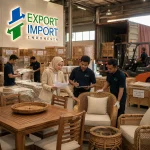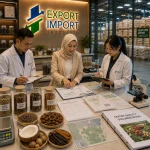

Managing multiple foreign vendors can drain your operational resources. Find out how partnering with a centralized trade management company in Indonesia streamlines your procurement process and drastically reduces logistical overhead.
In today’s hyper-connected global economy, sourcing high-quality products from overseas is no longer a luxury reserved for massive multinational corporations; it is a fundamental requirement for businesses of all sizes striving to remain competitive. Indonesia, with its rich natural resources, skilled artisan communities, and expanding manufacturing capabilities, has emerged as a premier sourcing destination for everything from luxury furniture and home décor to agricultural commodities and textiles.
However, unlocking the immense potential of the Indonesian market comes with a steep learning curve. For international buyers, the initial excitement of finding exceptional products at competitive prices is often quickly overshadowed by the harsh realities of cross-border procurement. Managing multiple foreign vendors, navigating complex local regulations, and coordinating fragmented shipping schedules can rapidly drain operational resources.
This is where the paradigm of global procurement shifts. Instead of acting as a solitary buyer juggling a dozen different suppliers, savvy businesses are increasingly turning to a more sophisticated solution: the end-to-end export trading partner.
The Hidden Costs of Fragmented Sourcing
To understand the value of a centralized trade management company, one must first recognize the hidden costs associated with the traditional, fragmented approach to overseas sourcing.
When a retailer or interior design firm attempts to source directly from multiple independent workshops or factories in Indonesia, they often encounter a predictable set of hurdles:
- Communication Bottlenecks: Dealing with severe time zone differences, language barriers, and varying standards of professional communication can turn a simple design revision into a weeks-long ordeal.
- Inconsistent Quality Control: A sample might look perfect, but ensuring that a production run of five hundred units matches that exact standard requires on-the-ground presence. Without local oversight, buyers risk receiving entire containers of substandard goods, leading to massive financial losses.
- Logistical Nightmares: Purchasing from five different suppliers means coordinating five different production timelines, five local freight movements, and attempting to consolidate them into a single shipping container. If one supplier is delayed, the entire shipment is held up, accruing warehousing fees and disrupting retail schedules.
- Compliance Risks: Navigating export licenses, legal timber certifications (like Indonesia’s SVLK), and customs documentation is highly complex. A single missing document can result in cargo being seized or delayed indefinitely at the port of entry.
The Power of Centralization: What is an End-to-End Partner?
An end-to-end export trading partner is a specialized company operating directly within the source country—in this case, Indonesia. They do not merely sell products; they manage the entire supply chain on your behalf. They act as your localized procurement office, your quality assurance team, your legal compliance department, and your logistics coordinator, all rolled into a single, cohesive entity.
By partnering with a centralized trade management firm, international buyers can transform a chaotic, multi-vendor web into a streamlined, single-point-of-contact operation.
Strategic Advantages of an Indonesian Trade Management Partner
Shifting from a fragmented sourcing model to an end-to-end partnership yields immediate and measurable strategic advantages.
1. A Single Point of Contact and Accountability
Instead of waking up to thirty emails from a dozen different factory managers, you communicate with a single, dedicated account manager. This partner understands Western business standards, speaks your language fluently, and operates as an extension of your own team. If there is a delay at a factory or a design specification needs altering, your trading partner handles the localized troubleshooting. You issue one purchase order, communicate with one entity, and hold one party accountable for the final delivery.
2. Rigorous, On-the-Ground Quality Control
Quality cannot be inspected into a product at the final port; it must be managed throughout the production cycle. A reputable trading partner employs on-the-ground Quality Control (QC) inspectors who visit factories at multiple stages: raw material selection, mid-production assembly, and final finishing. This proactive approach identifies and rectifies defects before they are packed into a container, virtually eliminating the risk of receiving unsellable inventory.
3. Seamless Cargo Consolidation
Perhaps the most significant financial advantage of a centralized partner is logistical consolidation. If you want to order rattan chairs from Cirebon, teak tables from Jepara, and hand-woven textiles from Bali, your trading partner will coordinate the disparate production schedules. They will receive the goods at their own centralized warehouse, perform final inspections, and expertly consolidate the diverse products into a single shipping container. This maximizes the cubic meter (CBM) efficiency of the container, drastically driving down your per-unit shipping costs and simplifying your receiving process at home.
4. Navigating Compliance and Export Administration
International trade is heavily regulated. In Indonesia, exporting wooden furniture, for example, requires strict adherence to the SVLK (Timber Legality Assurance System) to prove the wood was not illegally logged. An end-to-end trading partner holds the necessary export licenses, manages the complex bureaucratic paperwork, and ensures that every item in your container complies with both Indonesian export laws and the import regulations of your destination country.
5. Access to a Vetted, Scalable Network
Finding reliable suppliers is a trial-and-error process that most businesses cannot afford. An established trade management company already possesses a vast, rigorously vetted network of artisans, manufacturers, and raw material suppliers. They know which factory has the capacity for a massive retail rollout and which boutique workshop is best suited for intricate, bespoke hospitality designs. This instant access to a curated network significantly accelerates your speed-to-market.
Redefining Global Procurement
In an era where supply chain resilience is more critical than ever, relying on a fragmented network of overseas vendors is a high-risk strategy. The logistical overhead, the communication fatigue, and the constant threat of quality issues can quickly erode profit margins.
Partnering with an end-to-end export trading company in Indonesia shifts the paradigm. It allows international buyers to focus on what they do best—designing, marketing, and selling exceptional products—while leaving the complexities of overseas manufacturing, quality assurance, and global logistics to local experts. It is not just a safer way to source; it is a definitive strategic advantage in a competitive global market.